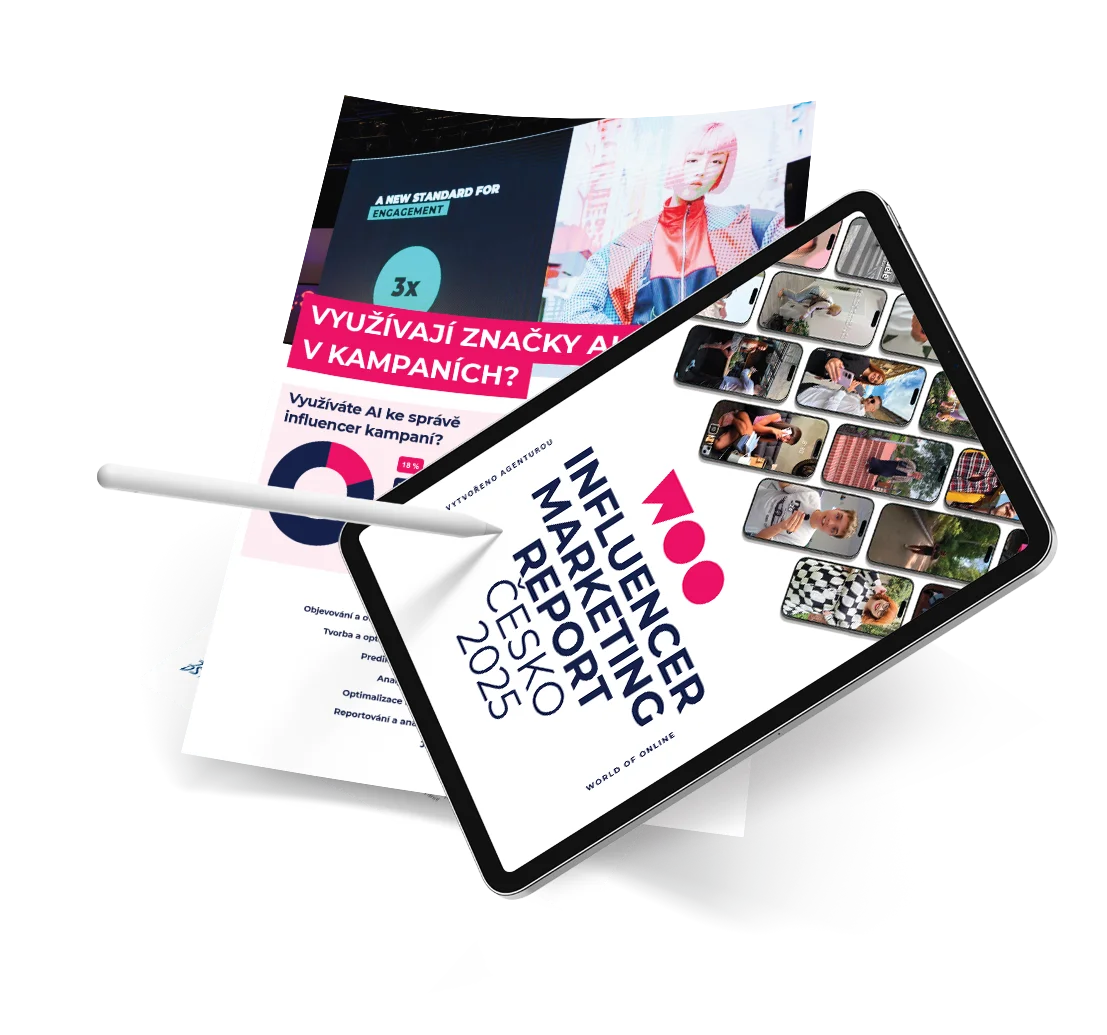
This perspective is shaped not only by our day-to-day work on campaigns, but also by insights from our first influencer marketing report for the Czech market, which we introduced this year. The combination of hands-on experience and data clearly shows where influencer marketing is heading next.
From campaigns to partnerships
One of the key trends for 2026 is the shift from one-off collaborations to longer-term partnerships. Brands increasingly realise that the true value of influencer marketing is not created within a single campaign, but over time. Repeated collaboration helps build consistent communication, deepen audience trust and enable a more systematic approach to content.
We see this shift both in the data from our influencer marketing report and in everyday practice. Influencers are no longer just one-time message carriers. They are becoming part of a brand ecosystem. For brands, this means greater continuity and predictability. For creators, it brings higher responsibility along with more space for authentic and meaningful creative work.
Authenticity as a standard, not an advantage
What once functioned as a competitive advantage is becoming the baseline in 2026. According to data from our Czech influencer marketing report, the vast majority of brands already involve influencers directly in the content creation process. Authenticity is no longer a nice-to-have, but a fundamental requirement for success.
Audience expectations are evolving as well. Users are increasingly sensitive to insincere collaborations, excessive branding and hidden advertising. This puts pressure on brands to be transparent, consistent and respectful of each creator’s natural style.
Creativity = new targeting
With the growing influence of artificial intelligence and automated content distribution, the role of creativity is changing. Platforms such as Meta and TikTok are increasingly basing content performance on what the content is, rather than who it is primarily targeted at. Creativity is becoming a new form of targeting.
For 2026, this means working with a higher volume of variations, systematically testing different formats and building systems of ideas instead of relying on one big campaign. Influencer marketing is moving closer to performance marketing, without losing its human touch and authenticity.
Data over intuition, but without illusions
The year 2026 will also bring a more realistic approach to data. While investment in influencer marketing continues to grow, measurement and evaluation remain a challenge for many brands. Czech market insights show that without specialised tools, agency support or in-house teams, it is difficult to fully understand the real impact of campaigns.
The direction, however, is clear. Brands will increasingly combine brand and performance metrics, focus on the long-term effects of collaborations and approach influencer marketing as part of an overall strategy rather than as an isolated channel.
Regulation, ethics and trust as a competitive advantage
As the influence of creators grows, so does the pressure for regulation and ethical behaviour. The year 2026 will bring greater emphasis on proper disclosure of collaborations, responsible handling of sensitive categories and the protection of younger audiences. What some brands currently perceive as a limitation may become a strong competitive advantage.
Trust will be one of the most valuable currencies in influencer marketing. Brands that are able to build it consistently over time will gain an advantage over those focused solely on short-term performance.
Key takeaways for 2026
Influencer marketing in 2026 will not be about doing more collaborations, but about doing them better. About relationships instead of one-off campaigns, systems instead of randomness and content that delivers value long after it is published. Brands that understand this shift early will be able to unlock the full potential of influencer marketing.
The conclusions in this article are based on our hands-on campaign experience as well as data from the first influencer marketing report for the Czech market, which we authored ourselves. If you want to explore how to translate these trends into practice and build an influencer marketing strategy that truly makes sense in 2026, get in touch. We would be happy to discuss it with you.