Blog
Choose category ...

- 1. 9. 2026
- Zuzana Stypová
Artificial intelligence has become part of marketing faster than the rules for using it could keep up. It generates visuals, edits videos, writes copy, voices influencers, and can create content in minutes that would once have taken hours to produce. But from August 2, 2026, an important change is coming. New transparency obligations under Article 50 of the European AI Act will begin to apply in full.
- 6 min. reading
- 4. 8. 2026
- Nicola Tošnarová
Do you remember old family photo albums? They were heavy, smelled of paper and glue, and sat in the bottom drawer beneath the TV. They only came out when visitors arrived, sparking memories and the occasional laugh over a bath-time photo or a snapshot of us wearing nothing but a diaper and scraped knees. They were time capsules, private, safe, and meant only for our closest family. Then came photo books. They lacked some of the magic, but they still weren’t made for everyone.
- 5 min. reading
- 30. 6. 2026
- Nicola Tošnarová
Ten years ago, influencer marketing in the Czech Republic looked a lot like the Wild West. Post rates were often based on guesswork, and brands invested their budgets hoping someone would actually see the campaign. Predicting results or planning reach simply wasn’t part of the equation. Today, influencer marketing has matured. And at WOO, we’re introducing a major innovation: guaranteed impressions. Why do we believe this should become the new industry standard?
- 5 min. reading
- 10. 4. 2026
- Michaela Mucha
You may have felt a slight shock recently when checking your Ads Manager. Metrics that used to be stable suddenly shifted, and your cost per engagement (CPE) shot up. It’s not a mistake in your setup or a sudden drop in audience interest. It’s simply that Meta Platforms made a major change.
- 5 min. reading
- 28. 2. 2026
- Nicola Tošnarová
Influencers are no longer just an add on but often the centerpiece of campaigns. Fashion brands deal with speed to market, product logistics, campaign performance and cultural nuances across individual countries. And it is often these invisible factors that determine whether the investment in influencer marketing pays off or not.
- 5 min. reading
- 30. 12. 2025
- Zuzana Stypová
Influencer marketing has gone through a period of rapid growth, experimentation and, at times, a certain level of chaos. The year 2026 is likely to bring a slowdown in the best possible sense of the word. Fewer random collaborations, fewer quick wins, and more strategy, data and long-term thinking. Brands are no longer questioning whether influencer marketing works. They are focusing on how to do it well.
- 6 min. reading
- 2. 12. 2025
- Nicola Tošnarová
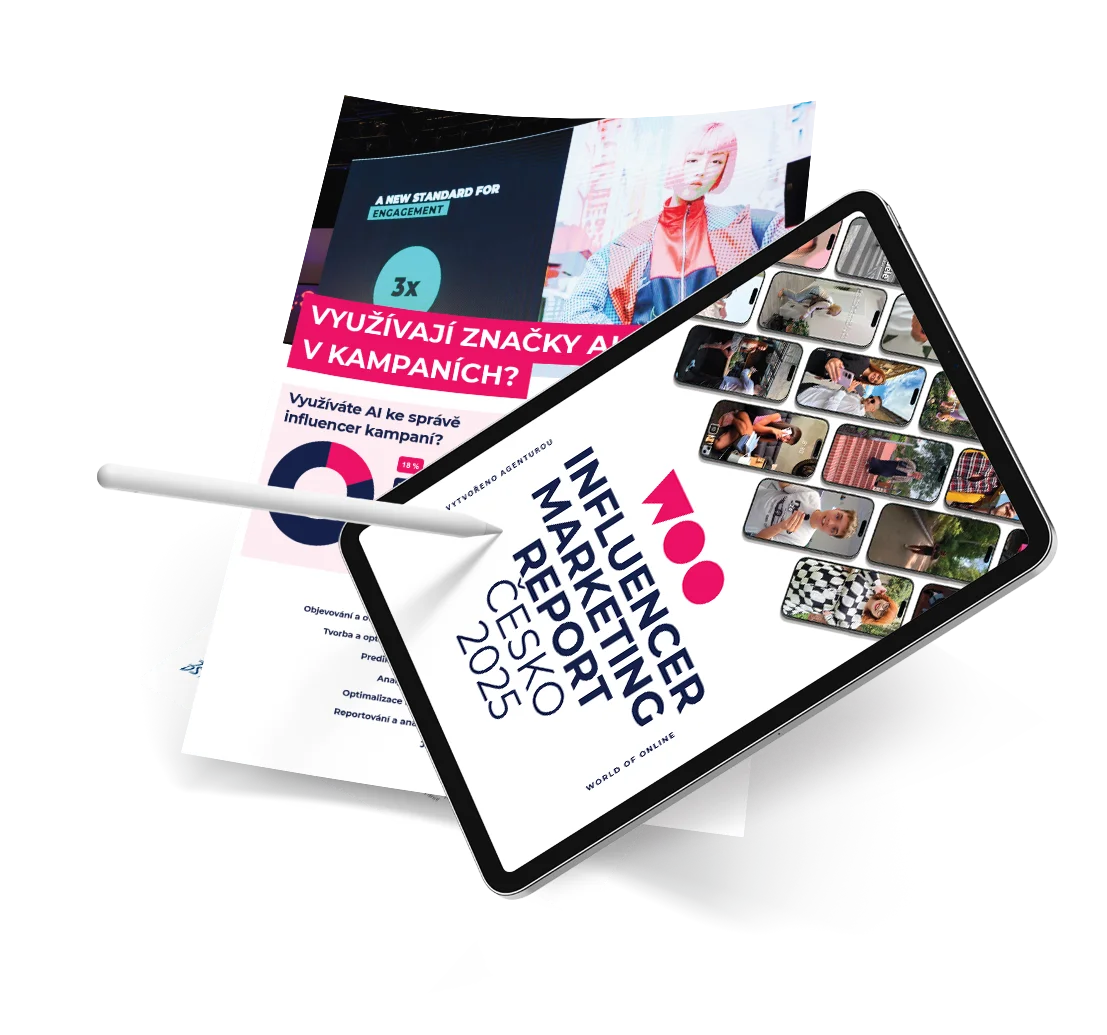
According to our Influencer Marketing Report Czechia 2025, 81 % of brands agree that finding the right influencer is the most challenging part of influencer marketing. And it makes sense, because we are working with people, not with a predictable format. Influencer marketing is about communication, aligned expectations, understanding the creator’s true value and managing hundreds of details that shape both performance and brand reputation. That is why this channel can be more complex and demanding than it may appear at first glance.
- 5 min. reading
- 4. 11. 2025
- Zuzana Stypová
On October 1, we stood behind the largest influencer marketing conference in Central and Eastern Europe, Influcon. It brought together people who don’t just do marketing but shape it – analysts, brand strategists, creatives, and ethics experts. Our goal was to create a space where data, strategy, and responsibility come together. We want brands, agencies, and creators to fully unlock the potential of this field – something possible only when we rely on facts, understand shifts in content creation, and stay true to fair principles.
- 8 min. reading
- 5. 8. 2025
- Zuzana Stypová
In the world of marketing, we plan years ahead. We prepare campaign launches, craft thoughtful strategies, build compelling stories.
But then, a moment comes along that no one saw coming: a viral video, a TikTok trend, or… a Coldplay concert.
- 6 min. reading
- 30. 6. 2025
- Nicola Tošnarová
You spend weeks planning an influencer campaign, refining the brief, approving research, posts, copy. Signed off. Published. Done. Everything’s in place. But for the audience, that’s only the beginning.
Sometimes, instead of a wave of likes and support, you get a wave of criticism. Dozens of negative comments appear under the post. Not always fair. And what happens? Nothing. No response. Maybe a few comments get deleted. Maybe someone notices days later. Maybe not at all. Sometimes it’s not even a wave, just one unpleasant comment is enough.
This is really the most critical moment.
- 4 min. reading
- 18. 6. 2025
- Nicola Tošnarová
Pricing in influencer marketing still evokes emotions and yet is one of the key factors in every campaign.
A recent discussion on LinkedIn showed how different ideas there are about how much an influencer can ask for and how much a brand should pay. It was kicked off by our CEO Petr Srna’s post about MONETA Money Bank’s campaign with Alice Bendova, where he compared the real cost of an output with what the data shows. The difference? Over CZK 110,000.
- 8 min. reading
- 3. 6. 2025
- Zuzana Stypová
Influencer marketing is booming in the Czech Republic, but the legislation meant to regulate it is several steps behind. While the European Union is making efforts to keep up with the times, the result is a set of directives that each country interprets in its own way and the Czech Republic, it seems, isn’t exactly leading the charge. At a panel discussion on marketing legislation hosted by the weekly Marketing & Media featuring, among others, lawyer Petra Dolejšová and our Opportunity Manager Martin Fryč, a number of important, and at times even absurd, points were raised. So what should influencers, agencies, and brands definitely be aware of?
- 6 min. reading
Leave your name and email here to subscribe to our amazing WOOsletter!
It's time to meet!
Come over for coffee.
© 2026 World of Online, s. r. o. All Rights Reserved.
Contact
Head office
World of Online, s. r. o.
Voršilská 139/5, 110 00 Praha
© 2026 World of Online, s. r. o. All Rights Reserved.